The text in Sanvitese
Explanation in English
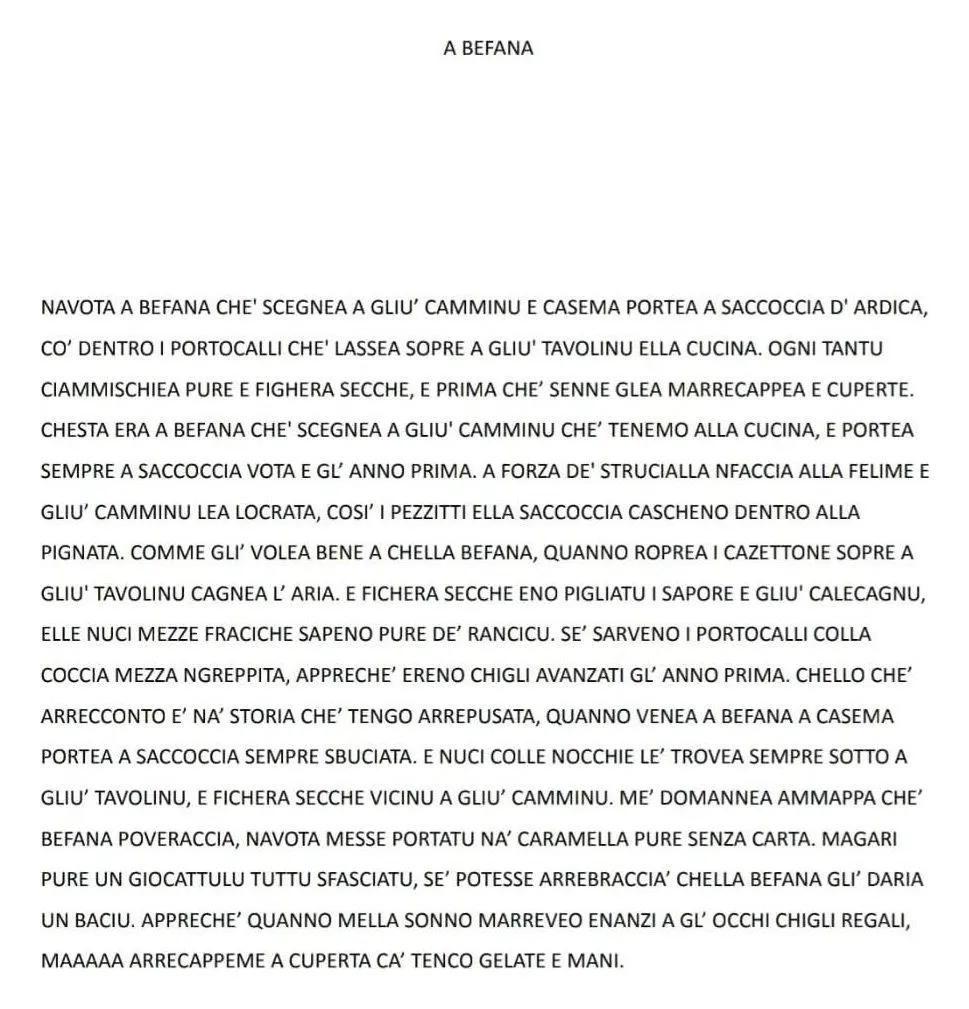
In Italy the Befana is the kindly old woman who, on the night before the Epiphany (6 January), comes down the chimney to leave gifts for children in their stockings. This poem recalls, with nostalgia and irony, childhood memories of the Befana as she was experienced in the old days.
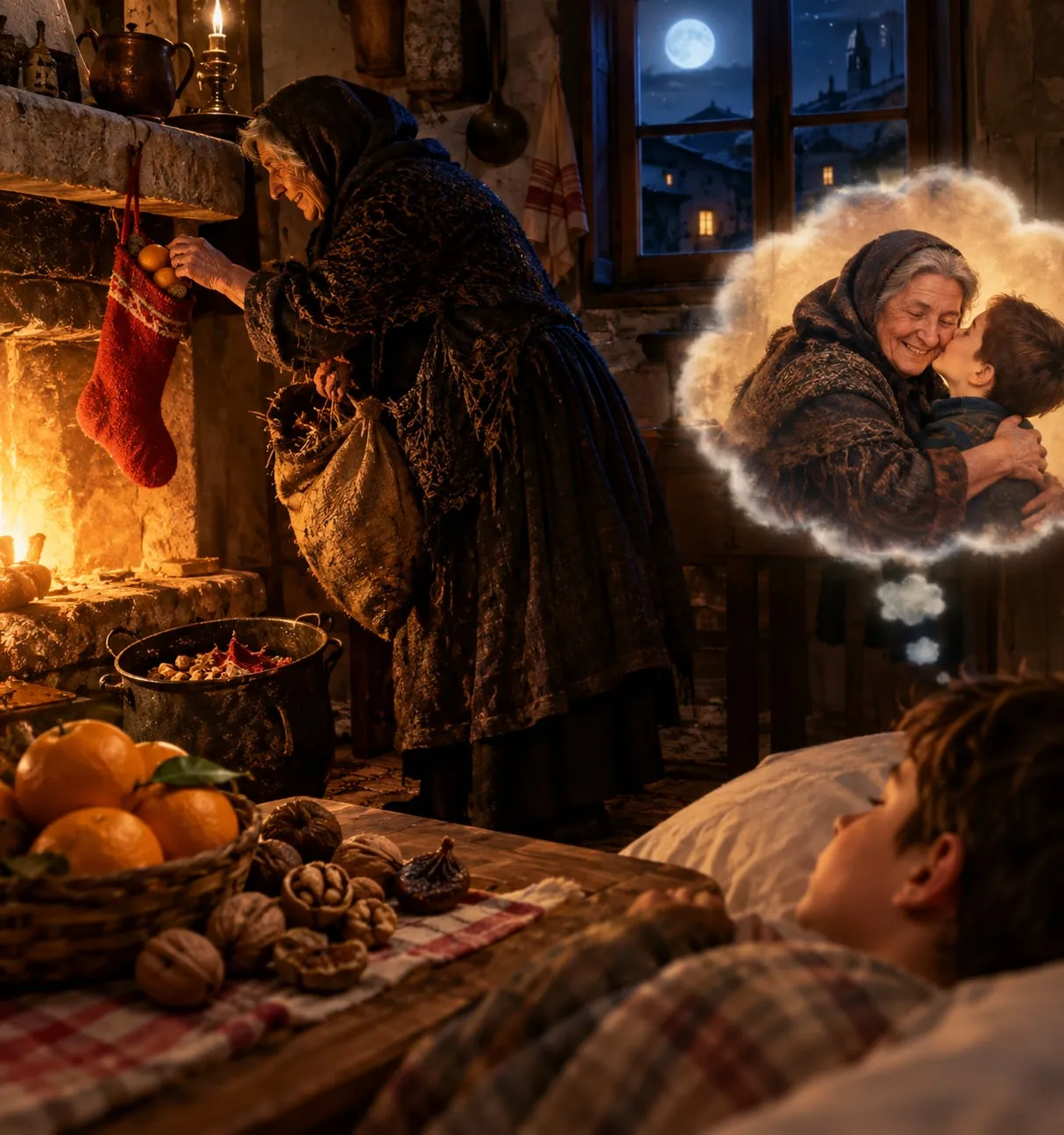
The Befana arrived at night, coming down the chimney and leaving a few simple gifts in the stocking hung by the hearth: oranges, walnuts, dried figs and sweets. Often, though, the fruit was old, the walnuts a little rancid and the dried figs had lost their flavour. Sometimes the stocking even had a hole in it, and the few gifts fell into the pot below.
And yet those small gifts were awaited with great excitement. The memory of the Befana is so vivid that the author still dreams of her, imagining hugging her again and giving her a kiss, as the child of those days would have liked to do.
But the dream breaks off: the author wakes up under the blankets, with frozen hands.
The deeper meaning is a longing for a childhood that was poor in material things but rich in anticipation, imagination and affection. Even though the gifts were modest and often of poor quality, the Befana stood for a special kind of magic that stayed in the heart for a lifetime.