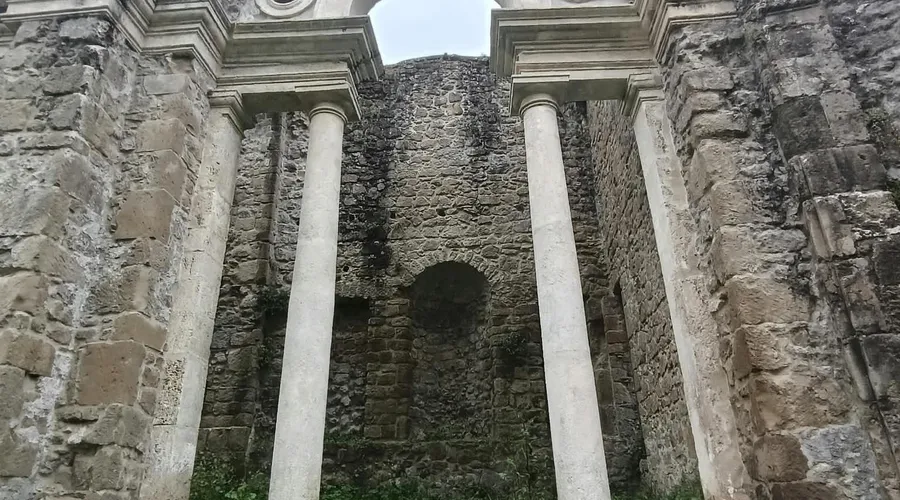
Just outside the town of Genazzano, set in the greenery of the valley below the Colonna castle, stands Bramante’s Nymphaeum, one of the lesser-known architectural treasures of the Prenestini hills. It was commissioned at the beginning of the 16th century by the Colonna family, lords of Genazzano, to Donato Bramante, one of the leading figures of the Roman Renaissance.
Conceived as a summer pavilion where one could gather in the cool air and enjoy theatrical performances, the nymphaeum blends echoes of Roman classicism - the Basilica of Maxentius and the frigidaria of the imperial baths were among its models - with the aspirations of Renaissance classicism. The façade, marked by three arches facing the valley, opens onto a hall covered by cross vaults, its walls enriched with circular and rectangular niches.
The work was however never completed: the political and family fortunes of the Colonna family interrupted the construction, and the building was later used as a cattle shed until the 18th century. The 1703 earthquake further worsened its condition, causing the collapse of the northern pillar and part of the vaults. Only at the end of the 19th century did the scholar Giuseppe Tomassetti recognize its value, identifying it as a Renaissance work attributable to Bramante.
Today the Nymphaeum, though a striking ruin, has become part of the FAI’s “I Luoghi del Cuore” project and can be visited, remaining one of the most original examples of Renaissance architecture in Lazio, just a short distance from San Vito Romano.
Source: FAI - I Luoghi del Cuore, VisitLazio.